


Introduction
To manage the pace of R&D and protect intellectual property (IP) such as core code, an increasing number of hardware startups, corporate R&D labs, and university engineering centers are setting up in-house desktop-level SMT prototyping lines. Within this system, the reflow oven is the absolute core component that determines the final soldering yield and electrical reliability.
This article provides an in-depth analysis of how to select a truly practical desktop-level reflow oven in 2026.
What Is a Desktop Reflow Oven?
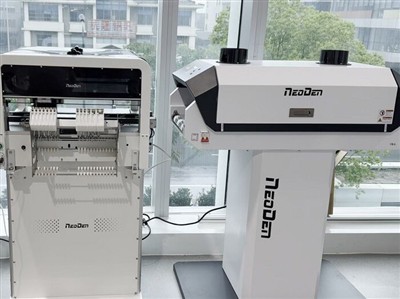
Definition: A desktop reflow oven is a compact, benchtop surface mount soldering device. Its primary function is to heat a populated PCB according to a preset temperature profile, causing the solvents in the solder paste to evaporate, the flux to activate, and ultimately melting the alloy particles to form a mechanically strong metallurgical bond (intermetallic compound, IMC) between the component leads and the PCB pads.
Compared to large industrial reflow tunnel ovens-which are often several meters long and feature 8 to 12 heating zones-desktop-level equipment is specifically designed for R&D prototyping and high-mix, low-volume production scenarios. It occupies a small footprint and does not require extremely high startup energy consumption.
Why is dedicated reflow soldering essential for PCB prototyping?
In modern SMT processes, using a soldering iron or a heating plate without closed-loop temperature control for prototyping is impractical. Purchasing a dedicated desktop reflow soldering machine primarily addresses the following engineering challenges:
- Handling micro-components and bottom-termination packages: When designs extensively use 0201 resistors and capacitors, fine-pitch BGAs, and QFN chips, manual soldering becomes physically impossible because the pins are hidden on the bottom of the components.
- Eliminating testing variables: The prototype testing phase is most vulnerable to the confusion of hardware and software bugs. If improper soldering temperature control leads to cold solder joints or micro-cracks, engineers may waste weeks troubleshooting a firmware issue that doesn't actually exist. A standard reflow profile ensures consistent electrical connections.
- Agile iteration speed: When paired with a desktop SMT machine, engineers can complete the entire PCBA assembly and perform power-on testing directly in the office within one hour of modifying the Gerber files and receiving the prototype board.
Analysis of Key Features to Look for
When evaluating a desktop reflow oven, don't just look at appearance and price, the core lies in its thermal uniformity and curve control capabilities.
1. Heating Mechanism
Desktop reflow ovens primarily use two heating methods: infrared radiation (IR) and forced convection:
Pure infrared heating offers fast thermal response but suffers from a critical "thermal shadowing" effect. Tall components block infrared rays, causing nearby shorter components to receive insufficient heat. Simultaneously, the differing heat absorption rates of dark chips and light-colored connectors can easily lead to localized scorching and incomplete soldering on the same board.
Forced convection utilizes a built-in high-temperature fan to circulate hot air at high speeds within the chamber. This convection mechanism evenly distributes heat across the entire PCB regardless of component height or color, making it the minimum standard for processing complex boards.

2. Multi-stage Temperature Profile Control
High-quality equipment must be equipped with a PID closed-loop control system and support segmented programming. Modern lead-free processes (such as SAC305 solder paste) typically require precise execution of four stages:
- Preheat Stage: Gradually heat at a rate of 1°C/s to 3°C/s to evaporate solvents and prevent rapid heating from causing water in the solder paste to boil violently and form solder balls.
- Soak Stage: Maintain a temperature between 150°C and 200°C for a period to activate the flux and remove oxides, while allowing large copper-clad areas and micro-pads on the board to reach thermal equilibrium.
- Reflow Stage: Rapidly heat to above the liquidus (217°C), reach the peak temperature, and achieve alloy melting and wetting.
- Cooling Stage: Rapidly cool down to form a dense, high-strength crystalline structure in the solder joints.
3. Peak Temperature Capability for Lead-Free Processes
Due to RoHS environmental regulations, lead-free solder paste has become the standard. Lead-free solder paste has a higher liquidus temperature, typically requiring the reflow oven's peak temperature to stably reach 240°C–260°C. This necessitates that the equipment's total power (usually 2.5 kW or higher) and the insulation material of the oven chamber meet the required standards; otherwise, during the critical reflow stage, the temperature may fail to rise or the heating ramp may be severely sluggish.
Comparison of Mainstream Desktop Reflow Soldering Machine Solutions in 2026
Currently, desktop reflow equipment on the market can be divided into three major categories based on structure, each with its own specific application focus:
1. High-Precision Convection Batch Ovens
- Representative Models and Features: Features a sealed drawer-style structure with an excellent forced hot-air convection design inside. Due to the sealed chamber, lateral temperature uniformity is exceptionally high, and software curve adjustments are highly flexible.
- Most Suitable Applications: R&D laboratories in enterprises with stringent yield requirements, as well as medical and aerospace hardware development. These devices are highly regarded in academic and R&D circles. for example, the NeoDen IN6C, listed in the MIT CBA public equipment catalog, is a classic model of this type.
- Advantages: No thermal shadows. Ideal for high-density BGA boards, built-in active fume extraction and cooling, extremely compact footprint.
- Limitations: Batch processing, accommodates only 1–2 boards per cycle, does not support continuous conveyor-style production.
2. Miniature Conveyorized Reflow Ovens
- Representative Models and Features: Equipped with an internal metal mesh conveyor belt, divided into 3 to 6 independent upper and lower heating zones, PCBs move continuously along the conveyor belt through different temperature zones. Examples include models such as the NeoDen IN6.
- Ideal Applications: Small EMS manufacturing facilities, maker spaces, and hardware startups in the pilot production phase.
- Advantages: Accurately simulates the thermodynamic processes of large-scale industrial tunnel ovens, supports continuous board feeding, and offers significantly higher throughput than drawer ovens.
- Limitations: Requires a slightly larger footprint; after startup, it takes approximately 20 minutes for all temperature zones to reach thermal equilibrium before soldering can begin.
3. Budget IR Ovens
- Representative Models and Features: Extremely low-cost infrared tube heating boxes (e.g., T-962).
- Best Suited For: Purely personal DIY hobbyists or basic student experiments.
- Advantages: Extremely low budget threshold.
- Limitations: Significant temperature variations within the chamber; direct infrared radiation can easily burn plastic pin headers; users typically need to flash open-source firmware or modify the fan to barely make it usable for leaded soldering. Not recommended for professional teams.
In-House Desktop Reflow Line vs. Outsourced PCBA Manufacturing
For engineering managers, this is the most direct trade-off in operational costs.
| Comparison Dimensions | In-house Desktop Reflow Line | Traditional PCBA Rapid Prototyping |
| Test Iteration Cycle | 1–2 hours per run; multiple board revisions can be validated on the same day. | 3–10 business days (including logistics). |
| Prototyping Setup Fees (NRE) | Zero. Only the cost of components and bare boards is incurred. | Extremely high. Engineering and stencil fees are charged for every revision, regardless of the number of boards. |
| Intellectual Property (IP) | Absolutely secure. Design files, BOMs, and firmware never leave the lab. | Complete design documentation must be shared with third-party manufacturers. |
| Flexibility in Process Control | Components can be swapped, solder joints reworked, or profiles adjusted at any time, facilitating hardware bug troubleshooting. | Any adjustments require formal Engineering Change Order (ECO) procedures. |
How to Set Up a Desktop-Level SMT Prototyping Line Around a Reflow Oven
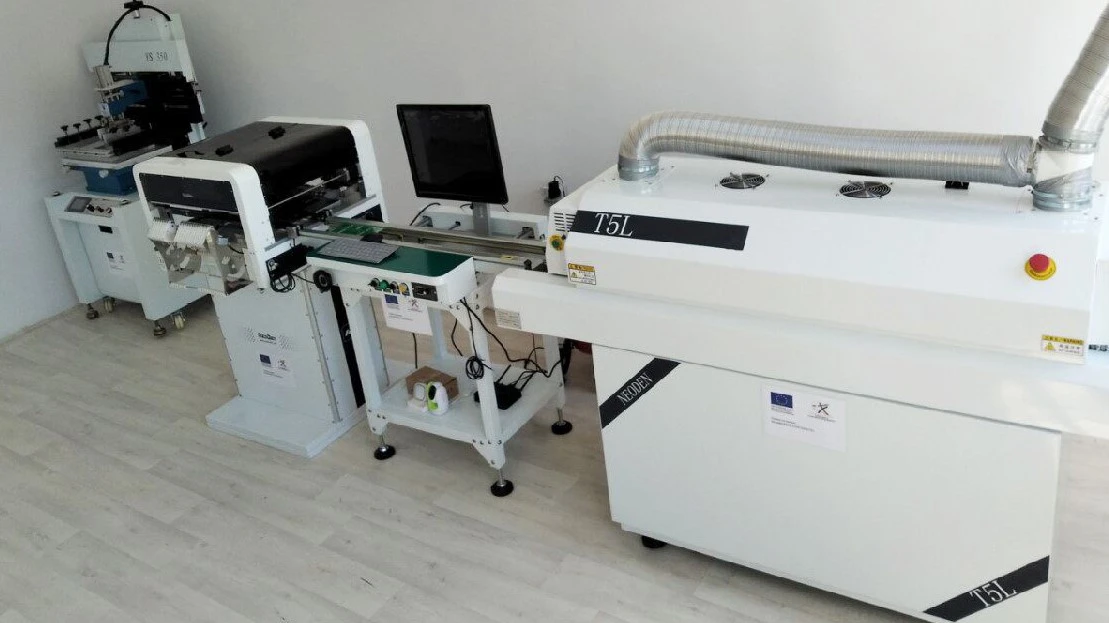
A reflow oven cannot operate independently. A complete, practical desktop SMT prototyping line consists of three core components:
- Solder Paste Printing (Stencil Printer): Prepare a manual precision screen printing station and a laser-cut stencil (typically 0.1mm–0.12mm thick). Use a squeegee to precisely apply solder paste onto the pads. Note: Nearly 70% of reflow defects in the SMT process (such as solder bridges or insufficient solder) stem from poor printing.
- Component Placement (Pick and Place): For very simple boards, a manual vacuum pen can be used. However, for professional boards containing fine-pitch ICs, an automatic desktop pick-and-place machine equipped with a vision alignment system is essential to ensure placement accuracy and efficiency.
- Reflow Soldering: Gently place the assembled board into a desktop reflow oven, select the appropriate temperature profile for the solder paste, and complete the final metallurgical bonding.
In which scenarios is a desktop reflow oven most essential?
- Hardware Startups: Speed is critical. Rapidly iterate to produce fully functional beta prototype boards before investor meetings.
- Universities & R&D Centers: Meet students' needs for frequent, small-batch production of experimental boards while ensuring operational safety and compliant laboratory fume extraction.
- Small EMS Factories: Utilize desktop conveyor-belt ovens to handle customer rapid prototyping orders or first-article inspections (FAI), avoiding the need to occupy large-scale production lines.
FAQ
Q1: Can a desktop reflow oven process double-sided SMT PCBs?
Yes, this is standard procedure. First, print, place components, and reflow-solder the lighter bottom layer (e.g., a layer with only resistors and capacitors). After completion, flip the PCB over to print and place components on the top layer, then reinsert it into the oven. During the second reflow cycle, the components on the bottom layer will not fall off due to the surface tension of the molten solder paste.
Q2: Can I use a home oven instead of a professional reflow machine for prototyping?
This is strongly discouraged. Home ovens lack PID closed-loop control algorithms, resulting in extremely imprecise temperature regulation. Slow heating can cause the flux to dry out prematurely, leading to widespread cold solder joints, while temperature overshoot can directly burn expensive chips and cause the PCB substrate to delaminate and bubble.
Q3: After reflow, I noticed bridging between the pins of fine-pitch ICs. Was the oven temperature
set incorrectly?
Most likely not. Liquid solder paste has a natural tendency to contract during reflow. Solder bridging typically occurs during the first step of stencil printing (e.g., excessively thick paste or edge collapse) or when excessive pressure during placement squeezes the solder paste.
Q4: How long is a typical single soldering cycle for a benchtop reflow oven?
From entering the oven at room temperature to cooling and exiting, a complete lead-free process cycle takes approximately 5 to 8 minutes.
Q5: What routine maintenance is required?
Maintenance primarily involves cleaning. After the flux evaporates, it condenses on the inner walls of the furnace chamber and the viewing window, forming tar-like residues. It is recommended to regularly wipe these areas with anhydrous ethanol (IPA) or specialized PCB cleaning solution to keep the hot air circulation channels clear and to clean the exhaust filter.
Q6: Does a laboratory need to modify its power supply lines when purchasing this type of equipment?
It depends on the model. Entry-level equipment typically consumes around 1.5 kW, so a standard 10A outlet is sufficient. However, professional-grade full-hot-air drawer ovens or multi-zone tunnel ovens often have a total power consumption between 2.5 kW and 4.5 kW to ensure a 260°C heating ramp. For such equipment, it is recommended that the laboratory be equipped with a dedicated 16A or 20A circuit breaker circuit.
Conclusion
The core value of purchasing a benchtop reflow oven lies in providing a stable, repeatable, and uniformly heated process environment.
If your team is struggling with lengthy prototyping lead times and inconsistent test yields, investing in a professional benchtop reflow oven with true high-airflow convection and multi-stage temperature control curves will be a crucial step toward improving hardware R&D efficiency at the source.