



Introduction
In the new normal of high-mix, low-volume electronics manufacturing, SMT production lines impose nearly exacting demands on the timeliness and accuracy of material delivery. Traditional PCBA processing logistics rely heavily on manual cart transport, which is not only physically demanding but also prone to human error-such as delivering materials to the wrong machine or causing production schedule delays-along the flow chain from the line-side warehouse to the SMT placement machines. The introduction of AGVs (Automated Guided Vehicles) and the digital upgrade of material-handling tools are driving the evolution of in-factory logistics toward greater flexibility. This is not merely a simple replacement of automated hardware, it is a critical closed-loop component in the error-proofing and control chain of lean production for PCBA manufacturing.
Pain Points and Bottlenecks of Traditional Manual Logistics in Precision SMT Workshops
In a high-speed SMT workshop, every second of downtime means a sharp increase in process costs. When a production line is about to complete its current work order and prepare to switch to the next production batch, hundreds of types of surface-mount components, bare PCBs, and specialized stencils must be delivered precisely to the designated SMT placement machines within a specified timeframe. The drawbacks of manual distribution become glaringly apparent in this high-frequency handling process. Operators rely on paper work orders or verbal instructions to retrieve materials from the warehouse. During transport with hand carts, frequent crisscrossing not only disrupts the airflow balance in the cleanroom but also easily causes congestion in the aisles. A deeper quality risk lies in the possibility of material mix-ups caused by non-standardized operations. When dealing with component trays that look extremely similar, manual visual verification cannot completely eliminate errors such as placing the wrong tray on the machine or delivering it to the wrong production line. Furthermore, the severe jolts during transport may cause physical micro-cracks or compromise electrostatic protection in high-value, highly sensitive semiconductor components.
Technical Architecture and Scheduling Mechanism of AGVs
Laser-guided or QR code-guided AGVs deployed in SMT workshops operate on a foundation of highly integrated industrial-grade IoT technology and advanced central scheduling algorithms. High-precision LiDAR sensors mounted on top of the vehicles perform real-time dynamic tomographic scanning of equipment, columns, and aisles within the workshop, constructing a high-precision two-dimensional digital map within the system. The AGVs are equipped with integrated anti-static modules, and their wheels are made of electrostatic-dissipative polyurethane, ensuring that the vehicle's static voltage remains below the safety threshold of 100 volts at all times during operation. The Central Dispatch System (RCS) serves as the AGV's "brain." Through the plant-wide wireless network, it seamlessly integrates with the factory's MES (Manufacturing Execution System) and WMS (Warehouse Management System) to calculate optimal routes in real time, preventing collisions or delays among multiple AGVs in narrow aisles and enabling flexible scheduling with millisecond-level response times.
Paperless, Flexible Integration Across the Entire Material Flow Chain
The core value of digital material handling lies in completely eliminating the time lag between warehouse data and production line operations, thereby achieving a paperless and flexible integration of material flow. When the MES system determines that material consumption on a specific PCBA production line has reached a preset low-stock warning threshold, it automatically issues a replenishment work order to the WMS. After warehouse staff at the outbound station scan the material barcodes and load them into dedicated anti-static smart carts, the central dispatch system immediately activates a standby AGV. The automated guided vehicle automatically navigates to the docking station, secures the cart via mechanical undercarriage traction or a carrying mechanism, and autonomously shuttles along the digitized route. Upon reaching the target SMT machine, the AGV exchanges a docking signal with the line-side automatic loader or smart component rack via photoelectric sensors, enabling a seamless handoff of materials. The entire process requires no paper documentation, and delivery frequency has been upgraded from the traditional manual once-per-hour schedule to dynamic, real-time delivery based on machine consumption data.
Robust Physical Interlocks: A New Milestone in Error-Proofing
The most significant improvement brought by integrating AGVs into the entire PCBA manufacturing chain is the establishment of a quality error-proofing network enforced by machine-language constraints. Within the intelligent AGV delivery system, component trays, material carts, machines, and the AGVs themselves all possess unique identifiers (UIDs). When an AGV delivers materials to the production line, an onboard scanner or an optical code reader on the machine automatically triggers an interlock verification. If the AGV takes a wrong route and mistakenly enters a production line not specified in the work order, the placement machine's control system will immediately reject the materials and activate a flashing red warning light. At the same time, the AGV will lock itself in place to prevent unloading the material cart. This physical-level error-proofing, achieved through IoT hardware, completely eliminates the risk of oversights associated with traditional manual verification, ensuring 100% accuracy of materials entering the production line and significantly safeguarding the overall delivery quality of highly reliable electronic products.
The deep integration of flexible logistics and intelligent error-proofing is redefining the layout of modern electronics manufacturing facilities. Building a solid quality defense through digitalized material handling is the only path toward Industry 4.0.
Company Profile
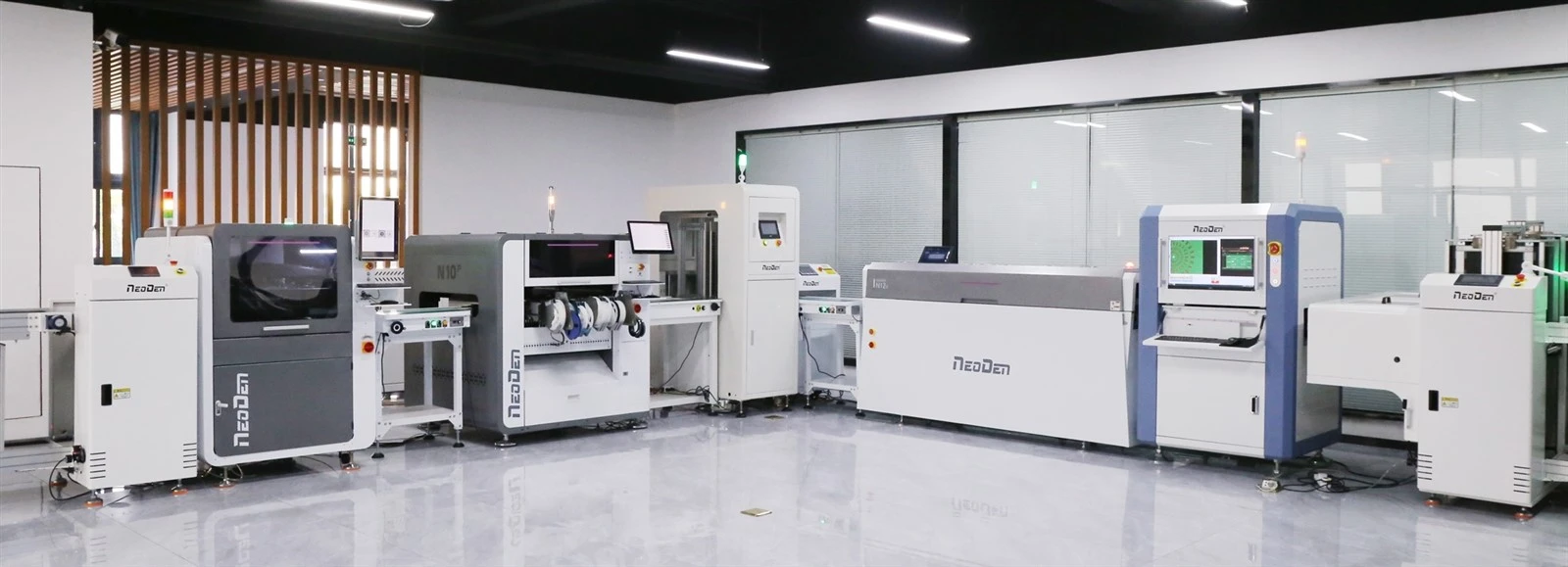
Zhejiang NeoDen Technology Co., Ltd. has been manufacturing and exporting various SMT lines since 2010. Taking advantage of our own rich experienced R&D, well trained production, NeoDen wins great reputation from the world wide customers.
with global presence in over 130 countries, the excellent performance, high accuracy and reliability of NeoDen PNP machines make them perfect for R&D, professional prototyping and small to medium batch production. We provide professional solution of one stop SMT equipment.
In our global Ecosystem, we collaborate with our best partners to deliver a more closing sales service, high professional and efficient technical support.
We believe that great people and partners make NeoDen a great company and that our commitment to Innovation, Diversity and Sustainability ensures that SMT automation is accessible to every hobbyist everywhere.