



Introduction
In the electronics product R&D process, firmware code is the lifeblood that powers hardware functionality and represents a company's most critical intellectual property asset. When the R&D phase transitions to production ramp-up, ensuring that tens of thousands of circuit board assemblies are not maliciously copied, and that the code is not tampered with or reverse-engineered during the PCBA manufacturing process, becomes a major concern for every product manager and technical director. Traditional offline programming or batch copying methods can no longer meet the security requirements for high-security products. The chip-specific firmware encryption and rolling key configuration services introduced by electronics manufacturers extend security protection to every workstation on the production floor, building a defense barrier that combines physical and digital measures.
Building a Digital Firewall in the Production Environment
Electronics manufacturing workshops are often viewed as open assembly lines, but for products involving core algorithms, they must be treated as high-risk areas for data security. Electronics manufacturers can isolate the firmware programming process from standard testing procedures and operate it within a controlled, secure production area. This process relies not only on physical access control but also on strict handshake protocols executed at the data layer via hardware encryption modules. When finished PCBA boards enter the functional testing and programming stations, an encrypted data link is established between the production server and the on-site programmer. Firmware data remains fully encrypted during transmission; even if the network traffic is intercepted, unauthorized parties cannot obtain any raw instruction code related to the core algorithms. This end-to-end encryption mechanism-covering the entire process from file transfer to device execution-ensures that intellectual property remains under absolute control throughout its circulation.
Core Logic of Programming Based on Hardware Encryption Modules
Electronics manufacturers can deploy high-standard hardware security modules (HSMs) on the production floor to handle firmware programming tasks. Unlike the traditional approach of writing generic programming files directly to the chip, this module dynamically performs encryption operations during the programming process. Every chip entering the programming station possesses a unique physical identification code. Based on this unique identifier, the system generates a dedicated firmware encryption package in real time. This means that even if two boards have identical functionality, the firmware stored internally will exhibit subtle differences in processing logic after decryption. This dedicated encrypted programming method effectively blocks, at the architectural level, any attempts to mass-replicate firmware by reading the contents of a single chip, providing original-manufacturer-level protection for the firmware security of every PCBA product.
Application of Anti-Theft Mechanisms Using Rolling Key Configuration
To completely eliminate the risk of product cloning, electronics manufacturers can implement rolling key configuration technology. During the firmware programming phase, the system generates a dynamically changing rolling key for each circuit board. This key is not only bound to the chip's unique serial number but also incorporates variable parameters such as the production batch and timestamp. Upon the chip's initial boot, the firmware performs self-verification and local reconstruction based on this rolling key. If an unauthorized individual attempts to forcibly extract the firmware content from memory and clone it onto another unauthorized chip, the device will either lock completely or enter protection mode due to the lack of a corresponding correct key response. This anti-theft mechanism, which deeply binds the firmware to its physical carrier, has demonstrated exceptional value in applications such as financial terminals, medical data acquisition systems, and high-end new energy controllers, successfully warding off external illegal hacking attempts.
End-to-End Security Traceability in the Production Chain
All circuit boards that have undergone encrypted programming and key configuration are simultaneously recorded in the traceability chain of the Manufacturing Execution System (MES). Electronics manufacturers should accurately record the firmware version, key hash value, and programming time for each PCBA. If an anomaly is reported in post-market feedback, the management team can quickly retrieve the original programming data records from the day the product was manufactured. This traceability capability is not only used for quality improvement but also serves as critical audit evidence for the company to verify whether a product was manufactured under the original manufacturer's authorization. By combining firmware security controls with transparent, end-to-end management of production data, electronics manufacturers provide customers with more than just a soldered PCBA board-they deliver a carrier of intellectual property equipped with comprehensive anti-counterfeiting and anti-theft capabilities.
Firmware encryption and key management are critical engineering technologies for safeguarding market barriers in the high-end electronics sector.
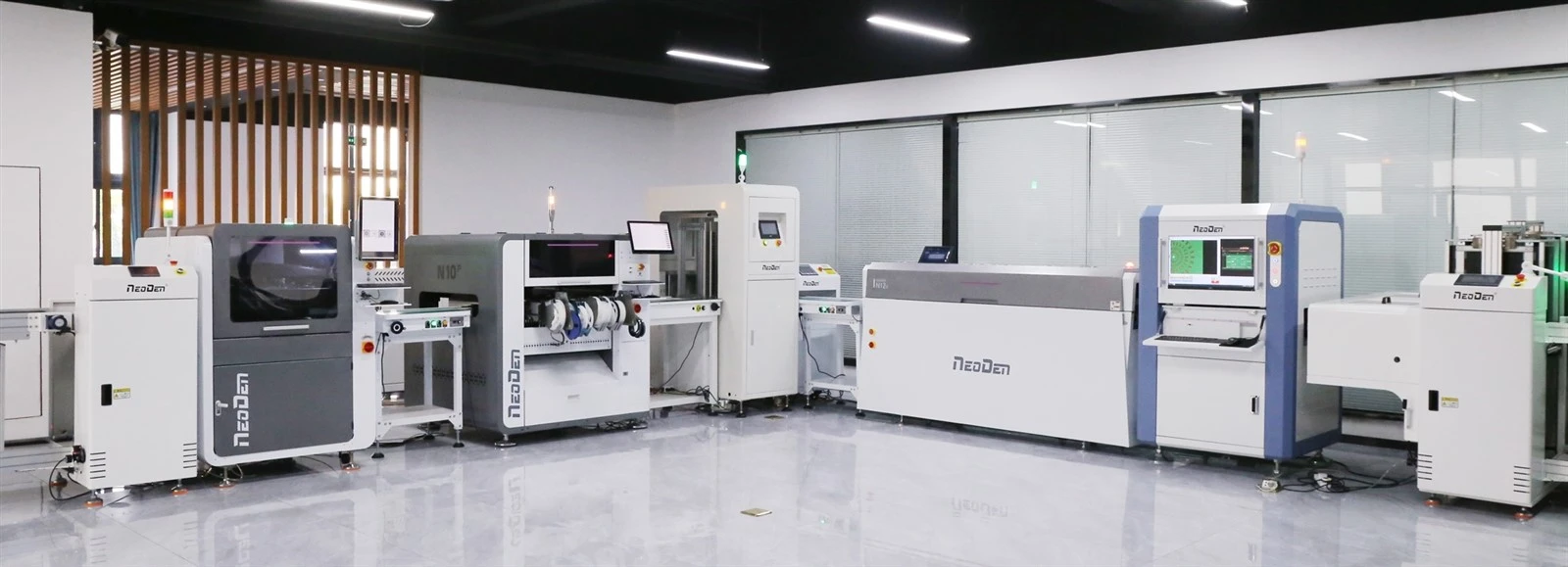
Quick facts about NeoDen
- Established in 2010 with 200+ employees & 27,000+ Sq.m. factory of independent property rights, to ensure the standard management and achieve the most economic effects as well as saving the cost.
- Owned the own machining center, skilled assembler, tester and QC engineers, to ensure the strong abilities for NeoDen machines manufacturing, quality and delivery.
- 40+ global partners covered in Asia, Europe, America, Oceania and Africa, to successfully serve 10000+ users in all of the world, to ensure the better and faster local service and prompt response.
- 3 different R&D teams with total 25+ professional R&D engineers, to ensure the better and more advanced developments and new innovation.
- Skilled and professional english support&service engineers, to ensure the prompt response within 8 hours, solution provides within 24 hours.
- The unique one among all of the Chinese manufacturers who registered and approved CE by TUV NORD.
- NeoDen supplies life-long technical support and service for all of the NeoDen machines, moreover, regular software updates based on the using experiences and actual daily request from the endusers.