



Introduction
In modern high-density surface-mount manufacturing processes, the widespread adoption of lead-free soldering has significantly raised the temperature range inside reflow ovens, with peak temperatures typically reaching 240 to 250 degrees. At such high temperatures, oxygen in the air reacts violently with molten solder and the copper pads on the PCB, causing deterioration in solder joint wettability. To minimize oxidation to its physical limit, the introduction of a nitrogen protective atmosphere has become a core measure in high-precision PCBA manufacturing. However, simply introducing nitrogen does not guarantee high-quality soldering; only by precisely controlling the oxygen concentration inside the oven to the ppm (parts per million) level can the process value of the nitrogen atmosphere be fully realized.
Mechanism of Oxygen-Induced Damage to Solder Joint Microstructure in High-Temperature Environments
The heating zone and soldering zone within the reflow oven are high-risk areas for oxidation reactions. When the solder paste on the circuit board melts at high temperatures, the active ingredients in the solder mask on the surface of the metal powder begin to volatilize, exposing the highly reactive surface of the molten metal. At this point, if the concentration of residual oxygen in the oven is too high, oxygen molecules will instantly react with metal elements such as tin and copper, forming a dense film of tin oxide (SnO or SnO₂) on the surface of the solder joint. This high-melting-point oxide film significantly increases the surface tension of the molten solder, hindering its outward diffusion and spreading, which directly leads to an increase in the contact angle of the solder joints. At the microscopic level, oxidation also interferes with the normal growth of intermetallic compounds (IMCs) between the copper pads and the tin alloy, causing them to become coarse and discontinuous. When the finished PCBA is subjected to thermal stress or mechanical vibration during subsequent operation, these microscopic interfaces-which have become brittle due to oxidation-are highly prone to stress cracking, leading to sporadic electrical contact failures.
PPM-Level Thresholds for Oxygen Concentration Based on Different Device Packages
Precise control of oxygen concentration requires establishing differentiated threshold values based on the physical characteristics of the circuit board and the type of device package. A blind pursuit of extremely low oxygen concentrations leads to an exponential increase in nitrogen consumption costs; therefore, a scientifically sound process window must be established. For standard 0402 and 0603 surface-mount resistor and capacitor components, as well as fine-pitch QFP devices, controlling oxygen concentration within the range of 1,000 to 1,500 ppm effectively suppresses surface oxidation and ensures basic wetting ramp-up. However, when dealing with QFNs featuring large-area bottom pads, ultra-miniature 01005 components, or densely packed BGAs, CSPs, and flip-chip devices, the process red lines must be strictly tightened. Such high-precision PCBA manufacturing projects require the oxygen concentration in the soldering zone to be strictly maintained between 200 ppm and 500 ppm. In an extremely inert environment below 500 ppm, the solder's wetting ability undergoes a qualitative leap, not only significantly reducing the void rate inside BGAs but also completely eliminating solder bridging defects between ultra-fine-pitch pins.
Digital Control via Multi-Point Closed-Loop Sampling and Nitrogen Flow Regulation
Achieving long-term stability of PPM-level oxygen concentration inside the reflow oven cannot rely on periodic manual offline testing; it must depend on the reflow oven's built-in online multi-point oxygen concentration analysis system and closed-loop control algorithms. High-quality reflow ovens are typically equipped with high-precision zirconia oxygen sensors in the preheating, equalization, soldering, and cooling zones, respectively. These sensors continuously sample the furnace gas in real time at a frequency of one second to monitor local fluctuations in oxygen concentration. The digital control system (SPC) dynamically captures these discrete data streams. If oxygen concentration in the soldering zone drifts to 450 ppm-exceeding the set process upper limit of 400 ppm-due to air introduced when boards enter or exit the oven, the backend control unit instantly issues a command to instruct the pressure-controlled regulating valve in that area to increase the flow rate of high-purity nitrogen. At the same time, the gas curtains and exhaust systems at both ends of the furnace work in concert to adjust the airflow balance, rapidly expelling the infiltrated air and bringing the oxygen concentration back within safe limits within 20 seconds, ensuring that every board passes through a constant, extremely low-oxygen environment.
End-to-End Coordination Ensures Nitrogen Purity and Airtightness Management Are Embedded in Process Specifications
PPM-level oxygen control is a systematic endeavor that relies not only on the closed-loop control of the reflow oven but also on standardized management of external support systems. The purity of the nitrogen supply at the source must meet the "five-nine" standard of 99.999%. This is the fundamental physical prerequisite for ensuring that oxygen levels inside the furnace can be reduced to below 200 ppm. During routine maintenance, technicians must periodically verify the airtightness of the oven's top cover gasket, viewing window glass, and mechanical connections of the guide rail adjustment mechanisms to strictly prevent gas leaks caused by microscopic gaps resulting from thermal expansion and contraction. Furthermore, during the production planning phase prior to PCBA surface-mount assembly, materials engineers should optimize solder paste selection for the nitrogen environment by choosing low-residue, highly reactive, halogen-free solder paste suitable for low-oxygen conditions. By leveraging nitrogen's protective encapsulation of activator volatiles, the soldering interface is further purified, resulting in flawless solder joint formation across the entire board.
Company profile
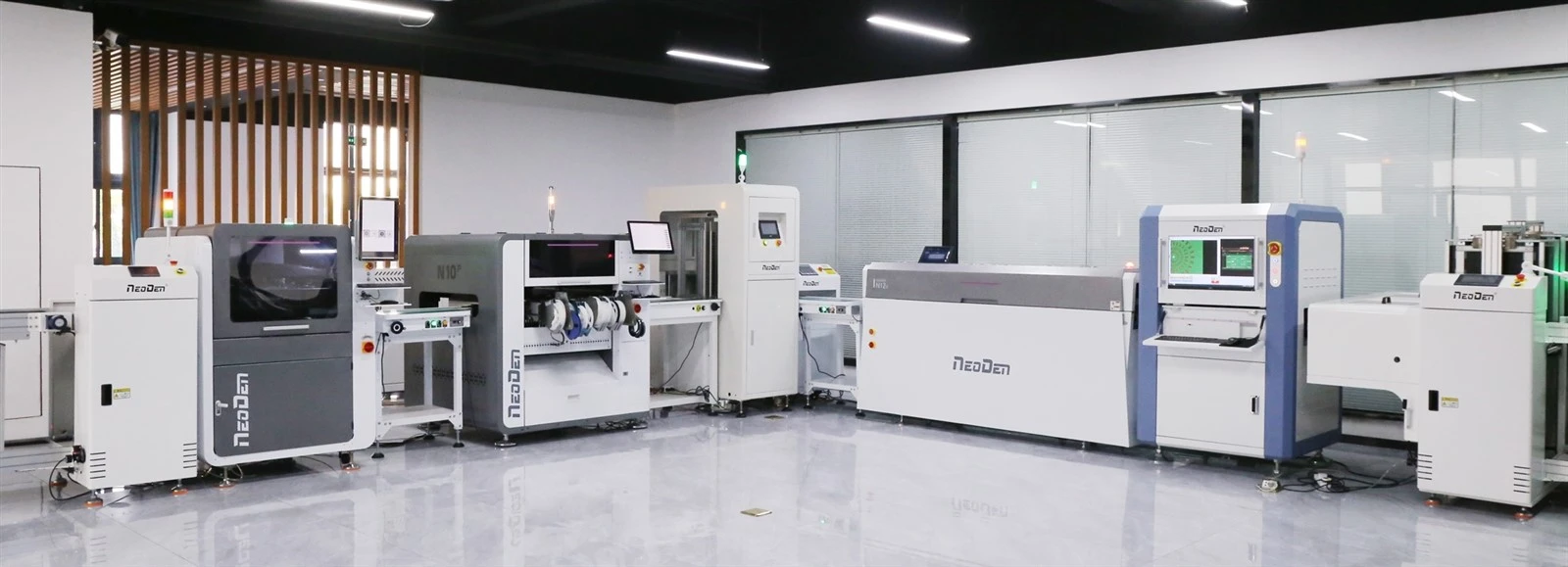
Zhejiang NeoDen Technology Co., LTD., founded in 2010, is a professional manufacturer specialized in SMT pick and place machine, reflow oven, stencil printing machine, SMT production line and other SMT Products. We have our own R & D team and own factory, taking advantage of our own rich experienced R&D, well trained production, won great reputation from the world wide customers.
In this decade, we independently developed NeoDen4, NeoDen IN6, NeoDen K1830, NeoDen FP2636 and other SMT products, which sold well all over the world. So far, we have sold more than 10,000pcs machines and exported them to over 130 countries around the world, establishing a good reputation in the market. In our global Ecosystem, we collaborate with our best partner to deliver a more closing sales service, high professional and efficient technical support.
We believe that great people and partners make NeoDen a great company and that our commitment to Innovation, Diversity and Sustainability ensures that SMT automation is accessible to every hobbyist on everywhere.