


Introduction
For procurement professionals, engineers, and entrepreneurs in the electronics manufacturing industry, one of the most frequently asked questions when SMT production line setup is: "I already have AOI (Automated Optical Inspection), so why do I need to invest in an additional SPI (Solder Paste Inspection) machine?" Or, "What is the fundamental difference between the two?"
Drawing on a decade of industry experience, this article provides an in-depth analysis of the core technical differences between the NeoDen S1 (SPI) and the NeoDen ND800 (AOI), exploring why a "two-pronged approach" combining both is key to reducing rework costs and enhancing core competitiveness in modern production lines striving for high yield rates.
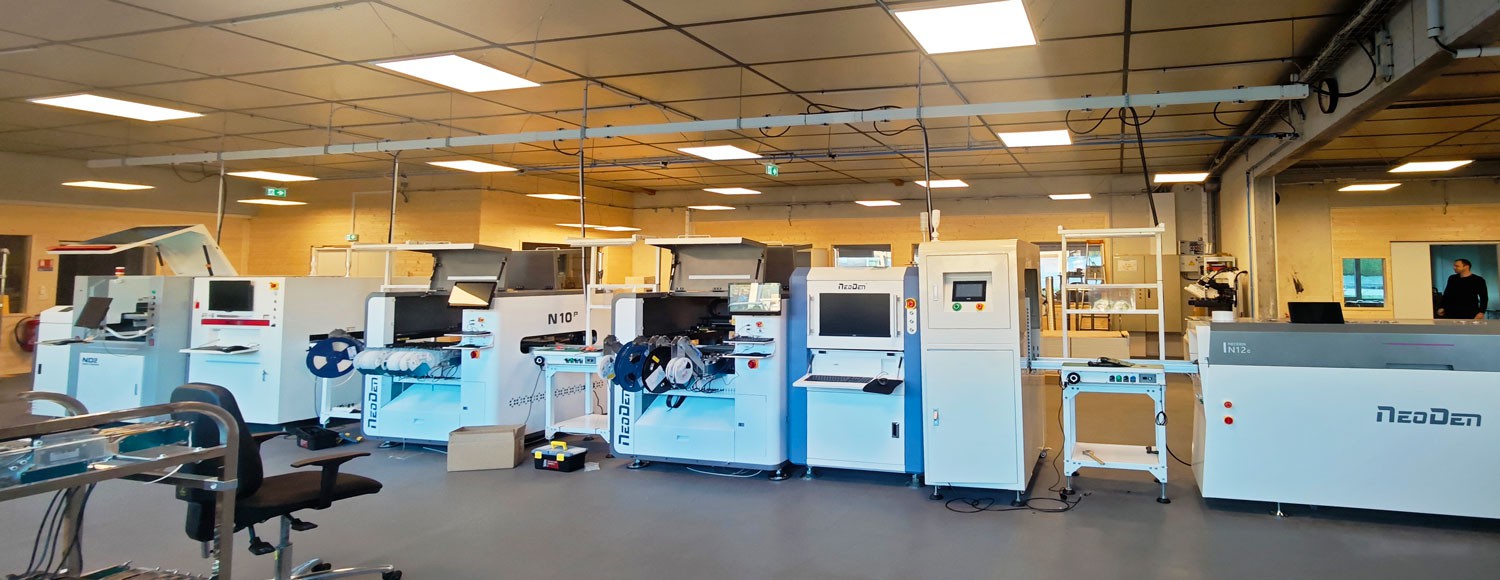
What is SPI (Solder Paste Inspection)?
In the SMT process flow, SPI (Solder Paste Inspection) is positioned after the solder paste printer and before the SMT placement machine. Its core function is to ensure that the solder paste is "printed correctly and accurately."
1. The Industrial Logic of "Prevention Is Better Than Cure"
According to industry statistics, approximately 60%–70% of soldering defects on SMT production lines are caused by poor solder paste printing. If issues are not detected at this stage, defective boards will proceed to the next process, meaning expensive chips will be placed on the wrong pads, ultimately resulting in scrap or high-cost rework after reflow soldering.
2. NeoDen S1 Inspection Technology
- Height and Volume Measurement: It precisely calculates the volume of solder paste on each pad. If the solder paste is too thick (prone to bridging/short circuits) or too thin (prone to cold solder joints/insufficient solder), the system will immediately trigger an alarm.
- 01005 and Ultra-Fine Pitch Support: For today's mainstream micro-components, the NeoDen S1 can easily handle inspection requirements for 01005 and even finer-pitch packages.
- Real-Time Feedback Function: The NeoDen S1 is not just a monitor, it can also communicate with the front-end printer to correct printing misalignment in real time through data feedback, truly achieving automated closed-loop control of the production process.

What is AOI (Automated Optical Inspection)?
AOI is typically deployed after SMT placement (pre-reflow) or after reflow soldering (post-reflow).
1. Identifying Complex Surface Defects
As a high-performance optical inspection platform, the NeoDen ND800 AOI not only checks for "presence" but also verifies "correctness." It can identify:
- Component defects: Missing, polarity, and wrong part.
- Soldering defects: Tombstones, solder ball, bridge, and misalignment.
2. Core Advantages of the NeoDen ND800: Algorithms and Efficiency
- Color Image Algorithms: Compared to black-and-white images, the NeoDen ND800 uses multi-color lighting to identify solder joint wetting and distinguish color differences between pads and solder, significantly reducing the false call rate.
- OCR/OCV Character Recognition: This is crucial for detecting incorrect components. It directly reads the silkscreen on the chip surface, ensuring that the model number of every component strictly matches the BOM.
- Ultimate Compatibility with 0201 Components: Its high-resolution industrial camera, combined with a highly stable lead screw system, ensures that micron-level defects can still be captured even during high-speed production.
Core Differences Between SPI and AOI: In-Depth Comparison and Decision Recommendations
For managers, understanding the differences between these two technologies helps facilitate scientific asset allocation.
1. Differences in Inspection Location and Objectives
- SPI: Inspects the "raw material state." Location: After printing. Objectives: Solder paste height, area, volume, offset, and bridging.
- AOI: Inspects the "finished/semi-finished product state." Location: After placement/soldering. Objectives: Component condition and solder joint quality.
2. Significant Differences in Defect Remediation Costs
If an issue is detected during the SPI stage, you only need to wash off the solder paste and reprint, at a cost of just a few cents.
If an issue is detected during the AOI stage (after reflow), you may require an expensive BGA rework station, specialized labor hours, or even have to scrap the entire PCBA due to irreparability-costs that can be 100 times higher than those at the SPI stage.
3. Core Parameter Comparison Table
| Feature | SPI (e.g., NeoDen S1) | AOI (e.g., NeoDen ND800) |
| Primary Function | Preventing printing defects | Monitoring placement/soldering quality |
| Inspection Dimensions | 3D (height, volume, flatness) | 2D/2.5D (Image, Characters, Shape) |
| Inspection Object | Solder Paste | Components & Joints |
| Primary Value | Reduce scrap rate, optimize printing process | Ensure final shipment quality |
| Typical Configuration | After solder paste printer | After reflow oven (or after SMT machine) |

Why Do High-Efficiency SMT Production Lines Need SPI and AOI?
1. Establish a Quality Closed-Loop
When your SMT production line is equipped with both of these devices, you establish a robust data network. SPI informs the front-end printer how to make corrections, while AOI monitors the back-end soldering results. If AOI detects frequent short circuits at a specific location, the system can trace back to SPI data to determine if the issue stems from consistently excessive solder paste volume at that position.
2. Addressing High-Density and High-Precision Challenges
With the widespread adoption of 5G and automotive electronics, BGA and QFN packages are becoming increasingly common. The solder joints for these packages are hidden beneath the components. While AOI can inspect for misalignment around them, if voids or bridging in the solder paste exist during the printing stage, only SPI can provide the most accurate early detection.
3. Boosting Customer Confidence and Brand Premium
For SMT contract manufacturers, including SPI and AOI in your production line configuration significantly enhances global buyers' trust in your facility.
How to Configure Based on Needs?
1. Electronics Manufacturing Startups / Small Prototyping Labs
- Configuration Recommendation: Prioritize the NeoDen ND800 AOI.
- Reason: In small-batch production, the "correctness" of shipments is the top priority. AOI helps filter out most obvious placement and soldering errors, offering excellent value for money.
2. Medium to Large SMT Factories / High-Precision Industrial Control Board Production Lines
- Configuration Recommendation: Must include both SPI and AOI.
- Reason: When dealing with 01005 or BGA packages, relying solely on AOI is no longer sufficient to control process quality. SPI capabilities can significantly reduce scrap rates after reflow soldering; in the long run, the savings in rework labor and material costs will offset the equipment costs.
Conclusion
In the world of SMT, SPI and AOI are a collaborative "dynamic duo." SPI focuses on prevention, Whether you are optimizing an existing production line or planning a new factory, choosing inspection equipment with high stability and advanced algorithms, such as NeoDen's, will give you a competitive edge in the future market.


Ready to boost your SMT production yield?
With over 10 years of on-site experience, the NeoDen team is ready to provide you with a free production line yield assessment.
[Click here to consult a NeoDen senior technical expert now]