



Introduction
In the PCBA contract manufacturing and electronics manufacturing services industry, traditional factories typically set high minimum order quantities (MOQs) as a threshold for screening customers. This practice is often justified by the need to reduce production line changeover frequency and spread setup costs. However, for innovative R&D companies in the product validation and prototype iteration stages, such rigid standards present an insurmountable barrier.
Production Line Scheduling Challenges Behind Order Fragmentation
For most PCBA manufacturers, switching a production line involves several hours of manual setup and equipment parameter calibration. If a single order is too small, the engineering costs-or NRE fees-allocated per board become prohibitively high, making them unaffordable for customers. Consequently, enforcing minimum order quantities has become a means for factories to maintain profitability.
Some electronics manufacturers have adopted several targeted technical solutions to resolve this dilemma when implementing zero minimum order quantities. By introducing modular SMT programming and automated digital work order switching technology, these manufacturers can reduce production line changeover time from hours to minutes. Even for the production of a single prototype, dynamic mixed production with regular mass-production orders can be achieved through an intelligent order-insertion model, without interrupting the core utilization rate of the entire production line.
Cost Control Capabilities Provided by Digital Manufacturing Systems
The ability to break free from reliance on minimum order quantities stems from the Manufacturing Execution System (MES), which provides the production floor with an extremely high level of granular control. In the production of small-batch PCBA orders, the largest cost drivers often stem from material waste and manual verification errors.
By deeply integrating production planning with the MES, each board is assigned a unique digital identification code from the start of production to the end of the line. The system automatically tracks the consumption of every individual component and interfaces directly with the procurement department. When a small-batch order is completed, the system can accurately calculate the remaining bill of materials (BOM), enabling immediate warehousing and turnover of materials-rather than allowing them to accumulate on production line workbenches and be lost, as in traditional models. This digital closed-loop system minimizes waste, freeing small-batch production from the heavy burden of material management losses and thereby establishing the economic foundation for providing zero-threshold manufacturing services.
Implementing High-Standard Quality Control in Small-Batch Production
Some believe that small-batch PCBA prototyping necessarily implies extensive manufacturing, but the opposite is true: a zero-minimum-order-quantity model requires that every single board undergo the same quality monitoring procedures as mass-production orders. On the electronics production line, even a single prototype board undergoes the full process of SPI solder paste inspection, AOI optical inspection, X-ray inspection, and final functional testing (FCT).
This commitment is not merely a demonstration of technical capability but is rooted in our long-term experience delivering high-end medical, industrial control, and automotive-grade electronic products. Small-batch orders often represent the most critical phase of a customer's product prototype validation; any early failures during the prototyping stage caused by inadequate manufacturing processes will directly impact the customer's subsequent technology selection and product launch timeline. Electronics manufacturers should seamlessly apply mass-production-level inspection standards to small-batch production, ensuring that even for single-unit processing, they can provide customers with accurate and reliable design verification feedback, thereby helping R&D teams avoid detours.
Establishing a Partnership-Based R&D Service Culture
From a manufacturer's perspective, zero minimum order quantities represent more than just a relaxation of contract terms; they signify a deep integration with the innovation and R&D ecosystem. Many successful projects initially stem from the iteration of just a few-or even a single-prototype boards. By providing barrier-free PCBA manufacturing support, electronics manufacturers can become deeply involved in the entire product lifecycle, from prototype design and small-batch validation to large-scale mass production.
In the early stages of R&D, through this barrier-free service model, electronics manufacturers can provide customers with DFM (Design for Manufacturability) analysis, helping them avoid complex manufacturing pitfalls as early as the board design phase. This trust-based partnership ensures that even after a product officially enters the high-volume production phase, clients will continue to entrust their most critical orders to manufacturing partners who offer transparent processes and controllable quality. Offering zero minimum order quantity services is, in essence, a market-driven validation of an electronics manufacturer's flexible manufacturing capabilities, aimed at breaking down traditional industry barriers through high-threshold technical solutions.
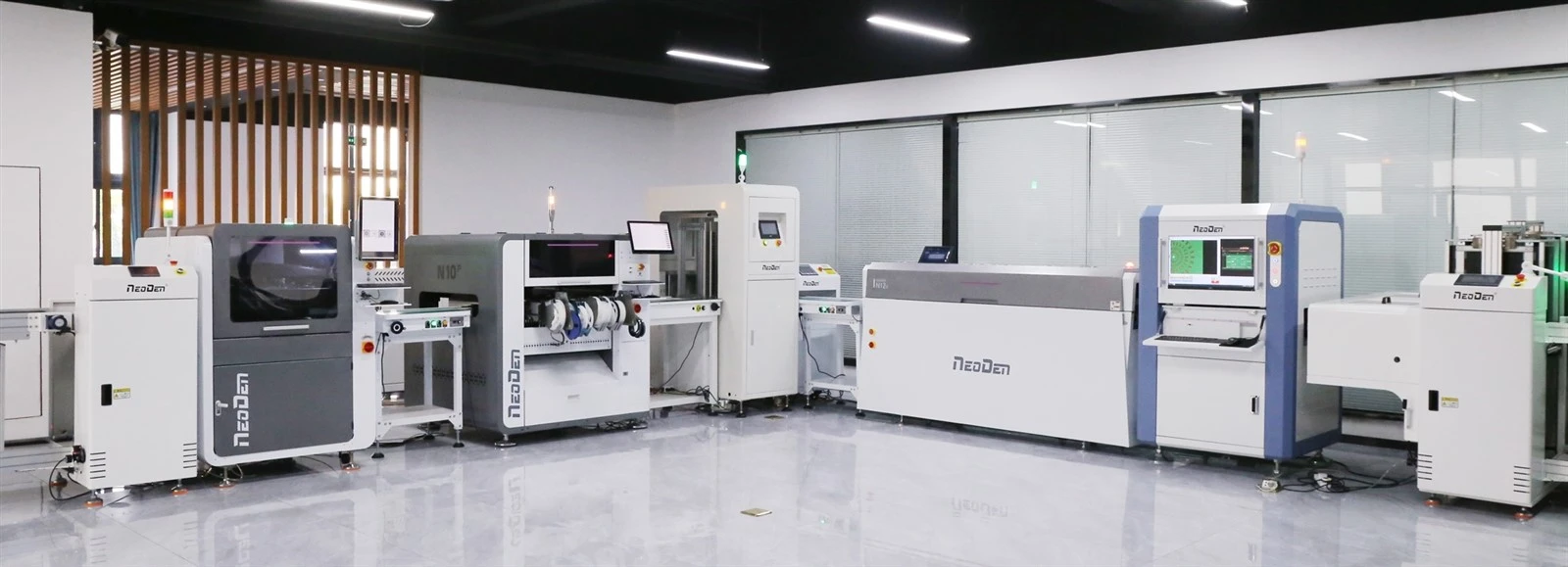
Quick facts about NeoDen
- Established in 2010 with 200+ employees & 27,000+ Sq.m. factory of independent property rights, to ensure the standard management and achieve the most economic effects as well as saving the cost.
- Owned the own machining center, skilled assembler, tester and QC engineers, to ensure the strong abilities for NeoDen machines manufacturing, quality and delivery.
- 40+ global partners covered in Asia, Europe, America, Oceania and Africa, to successfully serve 10000+ users in all of the world, to ensure the better and faster local service and prompt response.
- 3 different R&D teams with total 25+ professional R&D engineers, to ensure the better and more advanced developments and new innovation.
- Skilled and professional english support&service engineers, to ensure the prompt response within 8 hours, solution provides within 24 hours.
- The unique one among all of the Chinese manufacturers who registered and approved CE by TUV NORD.
- NeoDen supplies life-long technical support and service for all of the NeoDen machines, moreover, regular software updates based on the using experiences and actual daily request from the endusers.